 QR Code Scanner
To check what's in your cosmetics, scan the product's barcode with an ingredient scanner app. You'll get a safety score out of 10 and a list of flagged ingredients — parabens, silicones, harsh surfactants — each explained in plain English, so you can decide before it touches your skin.
The ingredient list on a shampoo bottle is written in INCI nomenclature — Latin, chemistry, and 4-point font. Nobody reads it in a store aisle. Scanning the barcode translates that list into something usable: a score, the specific ingredients of concern, and why they're flagged.
Check any product in 3 steps
- Open the scanner in the QR Code Scanner * Barcode Reader app.
- Scan the barcode on the shampoo, cream, sunscreen or makeup packaging.
- Read the verdict. A score out of 10 plus each flagged ingredient with its category (preservative, surfactant, silicone…) and the concern in one sentence.
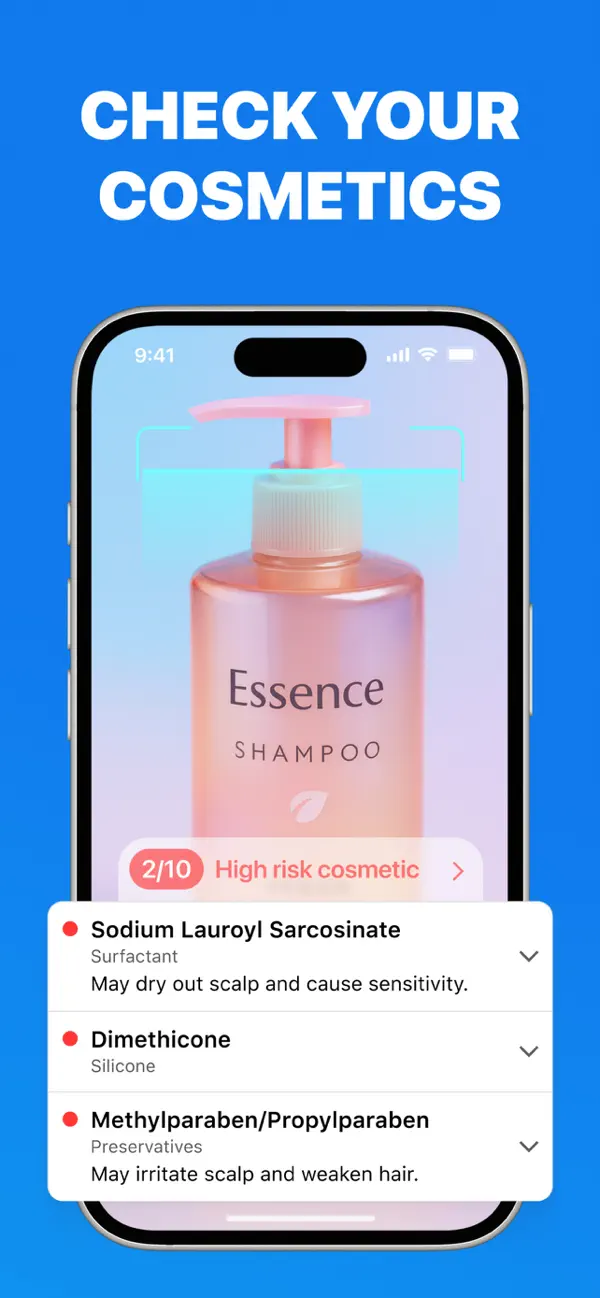
The ingredient groups scanners flag most
- Parabens (methylparaben, propylparaben) — preservatives linked to skin irritation and debated hormonal effects; the most common reason a product scores low.
- Harsh surfactants (sodium lauryl sulfate, sodium lauroyl sarcosinate) — effective cleansers that can dry out skin and scalp and cause sensitivity.
- Silicones (dimethicone) — cosmetic smoothers that can build up on hair and are questioned environmentally.
- Fragrance allergens — "parfum" can hide dozens of compounds; several are common contact allergens.
Flagged doesn't mean toxic — these ingredients are legal and everywhere. The point is informed choice: if you have sensitive skin, eczema, a dry scalp, or you're shopping for a baby, you want to see these names before buying, not after the reaction.
When the scan habit pays off
- Sensitive skin or allergies: spot your known triggers instantly instead of memorizing INCI names.
- Baby & kids products: marketing says "gentle"; the ingredient list decides.
- Comparing two products on the shelf: same price, same promise — scan both and take the higher score.
- Auditing your bathroom: ten minutes of scanning tells you which products to replace at next purchase.
And since it's the same scanner, you can check the Nutri-Score of your groceries and compare prices on the same shopping trip.
Know what's in the bottle before you buy it
Scan any cosmetic barcode for an instant safety score — free, no ads, no account.
Frequently asked questions
Which cosmetic ingredients are most often flagged?
Preservatives (parabens), silicones (dimethicone), harsh surfactants (SLS, sodium lauroyl sarcosinate) and fragrance allergens. Each is listed with the reason it's flagged.
Does a low score mean a product is dangerous?
No — flagged ingredients are legal and widely used. A low score signals ingredients associated with irritation, allergies or environmental concerns, which matters most for sensitive skin or clean-formulation preferences.
Can I scan makeup and perfume too?
Yes — anything with a standard retail barcode: shampoo, skincare, sunscreen, makeup, fragrance. If it's in the database, you'll see the score and breakdown.